Christmas Stockings with Bear: A Craft Fair Review
As an embroidery designer preparing for the upcoming weekend craft fair circuit, my table strategy relies heavily on selecting designs that stop customers in their tracks. This year, I am evaluating Christmas Stockings with Bear to determine its viability as a top seller for my handmade booth. The product description promises a "colorful and festive" aesthetic suitable for home decor, gifts, and even Christmas jumpers. In the high-stakes environment of a busy market, visual impact is everything. My goal is to assess whether this machine embroidery design translates well from a digital file to a tangible craft fair product that drives sales.
First Impressions and Aesthetic Appeal
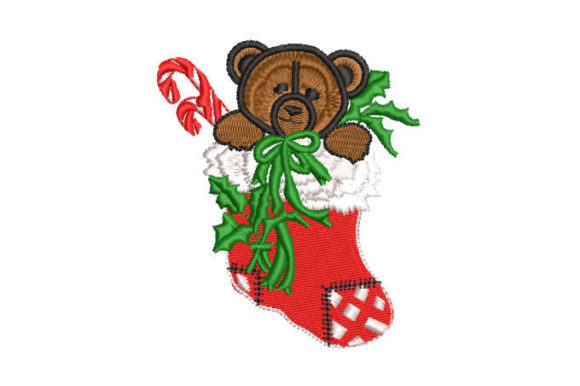
Upon loading the digital embroidery file into my software, the initial impression of Christmas Stockings with Bear is undeniably charming. The combination of a traditional holiday symbol like a stocking with the soft, approachable imagery of a bear creates a "farmhouse cute" vibe that resonates deeply with current trends. It feels less like a generic holiday graphic and more like a cozy, storybook illustration. For a small shop product, this emotional connection is vital. Customers at handmade markets are often looking for items that evoke warmth and nostalgia. The colorful nature mentioned in the description suggests it will pop against neutral linens or dark wools, making it a versatile asset for a diverse inventory.
Product Versatility for Market Tables
The true test of any embroidery file is how it performs across different substrates. I envision setting up a display featuring a variety of goods, and here is how Christmas Stockings with Bear fits into that lineup:
- Tote Bags and Market Totes: This is likely the strongest contender. A large hoop placement on a canvas tote allows the details of the bear and the stocking to shine. As a tote bag design, it serves as a walking advertisement for the holiday season.
- Aprons and Kitchen Textiles: For apron embroidery, placing this design on the bib or lower pocket adds a whimsical touch perfect for holiday hosting. Similarly, tea towel embroidery benefits from the horizontal layout often found in stocking designs, creating a lovely border effect.
- Patches and Pouches: If the design scales down well without losing clarity, it becomes an excellent candidate for an embroided patch. These can be ironed onto jackets or sold as standalone accessories. Small fabric pouches also make great gift-with-purchase items featuring this motif.
- Pillow Covers: Home decor is a massive category during Q4. A centered Christmas Stockings with Bear motif on a velvet or linen pillow cover elevates the perceived value of the finished product.
Production Practicality and Batch Selling
For an Etsy seller or boutique maker, time is money. The description notes that the design comes with "multiple em," which I interpret as multiple sizes or formats. This is crucial for batch production. Being able to scale the design for a small coin purse versus a large wall hanging without manually resizing and risking distortion saves hours of prep time. However, one must be cautious. Does the design work as a small accent, or does it require a large focal area to be understood? Based on the "colorful" descriptor, I suspect it relies on thread variation. If the details are too tight, scaling down for a cap or a small pouch might result in a muddy mess where the bear's features disappear.
Photography is another critical factor. For online listings, a design needs to photograph well under various lighting conditions. The contrast between the bear, the stocking, and the background fabric will determine how clickable a printable mockup or real photo appears on social media. A design with distinct outlines and vibrant thread colors tends to perform better in thumbnails than low-contrast, tonal designs.
Critical Technical Considerations
Before committing to stitching fifty units for the fair, there are several technical hurdles to clear. While the design looks promising on screen, real-world application requires scrutiny:
- Stitch Density: Festive designs often use dense satin stitches to create a shiny, premium look. However, high stitch density can cause puckering on lightweight fabrics like tea towels. It is essential to check the underlay and density settings.
- Fabric Texture: Embroidering on textured towels or thick wool caps can obscure fine details. The "bear" element likely has facial features that could get lost in a looped towel texture.
- Curved Surfaces: If applying this to caps, the curvature of the front panel can distort the image. A design with straight lines (like a stocking) might bow awkwardly on a curved surface unless digitized specifically for hats.
- Dark Fabrics: The description mentions it adds an accent to many items, but does it include a underlay stitch bright enough for black or navy fabric? Without proper coverage, the design may look dull on dark garments.
Maximizing Customer Engagement
In a crowded craft fair aisle, Christmas Stockings with Bear has the potential to be a "hook" item. Its cute factor draws in parents and grandparents, while the classic Christmas theme appeals to traditionalists. To maximize its impact, I recommend creating a cohesive display. Grouping items with this design together creates a mini-collection that looks professional and intentional. Whether it is a set of matching oven mitts and a towel, or a tote bag paired with a patch, the repetition of the image reinforces brand consistency.
Furthermore, the perceived value of commercial embroidery increases when the finish is flawless. Ensuring that jump stitches are trimmed and that the backing is completely removed prevents the item from feeling "homemade" in a negative way. Instead, it should feel like a high-end boutique find.
Final Designer Notes and Recommendations
Before running this design for profit, strict quality control measures are necessary. Always test the design on scrap fabric that matches your final product material. Check the thread contrast to ensure the bear stands out against the stocking. Review the spacing between elements to prevent thread breaks. Confirm the required hoop size to ensure it fits your machine's capabilities without excessive re-hooping. Inspect the stitch density closely; if it feels too stiff, consider editing the file. Use the right stabilizer—cut-away for stretchy knits and tear-away for stable wovens.
Create at least one real physical mockup to show customers, as tactile interaction drives sales more than design assets on a screen. Compare how the design looks on white versus cream versus colored fabrics to offer variety. Finally, and most importantly, confirm the commercial licensing terms. The description hints at multiple formats but does not explicitly state license rights. Never assume a file is free for commercial use; always verify you have the right to sell finished products made with this design.
In conclusion, Christmas Stockings with Bear appears to be a strong contender for the holiday season. Its blend of festive tradition and cute animal imagery hits a sweet spot for the current market. With careful attention to fabric selection, stabilizer choice, and sizing, this design can transform simple blanks into best-selling treasures that bring joy to customers and revenue to your business.