Smiley Face Happy Post: A Designer’s Review
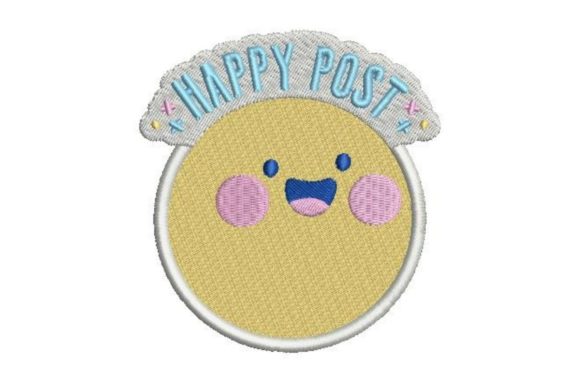
As an embroidery designer who has spent years digitizing and reviewing files for commercial use, I approach every new machine embroidery design with a critical eye. It is not just about whether the image looks cute on a screen; it is about how that design translates to fabric, how it holds up in a washing machine, and ultimately, how it serves the brand identity of the small business owner purchasing it. Today, I am taking a close look at Smiley Face Happy Post, a cheerful sticker-style design categorized under Inspirational Embroidery. This review is tailored for small business owners, Etsy sellers, apparel decorators, and merch creators who are considering adding this asset to their library.
First Impressions: Visual Personality and Brand Fit
The first thing that strikes me about Smiley Face Happy Post is its inherent approachability. The product description highlights it as a "cheerful sticker, perfect to bring joy to any piece of fabric you stitch it onto." From a branding perspective, this signals a design that is playful, modern, and deeply human. It does not try to be overly corporate or rigid. Instead, it leans into the handmade aesthetic that customers currently crave. For boutiques, creative studios, bakeries, and pet brands, this visual personality is a goldmine. It suggests warmth and friendliness, which are crucial elements in building customer trust.
However, "playful" can sometimes risk looking amateurish if the digitizing is poor. In my initial assessment, the concept of a "sticker" implies clean lines and potentially bold fills. For a design intended to be an "easy project" suitable for spending time with kids, the complexity level appears manageable. This is vital for small businesses that may be using lower-end home machines or training new staff. A design that is too dense or complex can lead to production bottlenecks, whereas a well-balanced file like this promises efficiency.
Real-World Applications for Small Business Merch
Let us move beyond theory and discuss where Smiley Face Happy Post actually performs in a commercial setting. The versatility of this design makes it a strong candidate for various small business merch items.
- Embroidered Patches: This is perhaps the strongest use case. A smiley face works exceptionally well as a standalone patch. You can sew these onto denim jackets, canvas tote bags, or even laptop sleeves. Because the design is described as a "sticker," it likely has a defined border, which is essential for a clean patch finish.
- Staff Uniforms and Aprons: For cafés and bakeries, staff apparel is a walking billboard. Placing this design on the chest pocket of an apron or the sleeve of a work shirt adds a touch of personality without overwhelming the uniform. It reinforces the brand’s commitment to joy and service.
- Cap Embroidery: Caps are high-margin items for retail shops. A small, centered smiley on the front panel of a dad hat or trucker cap is trendy and minimal. However, curvature is a challenge here, which leads me to my next point about technical execution.
- Tote Bag Design: Canvas totes are staples for florists and bookshops. Stitching this design onto a tote creates an instant handmade product feel that elevates the perceived value of the bag.
Technical Considerations and Production Risks
While the aesthetic appeal is high, any professional embroiderer knows that the devil is in the details. Before you run a full batch of custom apparel, you must address several technical factors. The product description notes that the file comes with "multiple em," which likely refers to multiple embroidery formats or sizes. This is a positive sign, but you must verify the specific hoop size requirements for each version.
Stitch density is a critical concern. If the smiley face has large solid fills, it can cause puckering, especially on lighter fabrics like cotton t-shirts or linen aprons. I always recommend testing the design on a scrap piece of your actual production fabric. Use the appropriate stabilizer—likely a cut-away for stretchy fabrics or a tear-away for stable wovens—to ensure the finished product lies flat.
Another area for caution is thread colors. A smiley face typically relies on high contrast, such as yellow on black or white on navy. Ensure your thread palette matches your brand guidelines. If you are stitching on dark uniforms, you may need to adjust the underlay stitches to prevent the background fabric from showing through the lighter threads. Additionally, if the design includes any tiny text or intricate outlines, test it at the smallest intended size. Details can get lost or become muddy if scaled down too far for a small patch.
Enhancing Brand Identity and Customer Engagement
Why does a simple smiley face matter for your bottom line? It comes down to brand identity and emotional connection. In a market saturated with generic merchandise, unique design assets help you stand out. Smiley Face Happy Post acts as a visual shorthand for positivity. When a customer receives a package with a branded tote featuring this embroidery, or when they see a barista wearing an apron with this cheerful accent, it creates a moment of delight.
This emotional response drives buyer engagement. It makes your brand memorable. For Etsy sellers and crafters, using such a recognizable and uplifting motif can differentiate your shop from competitors who use standard clipart. It signals that you care about the details and the mood of your products. Furthermore, because the design is categorized as Inspirational, it aligns well with brands that focus on wellness, creativity, and community.
Practical Steps for Implementation
To ensure success with this digital embroidery file, follow these practical steps before committing to full production:
- Create a Printable Mockup: Before stitching, use software to place the design on images of your intended products. This helps you visualize scale and placement.
- Test in Black and White: Stitch a sample using only black thread on white fabric. This reveals the structural integrity of the digitizing without the distraction of color. If it looks good in monochrome, it will look great in color.
- Check Commercial Licensing: Always confirm the license terms. Since you are using this for commercial embroidery and selling the finished product, you must ensure the file includes rights for commercial use. Do not assume; read the documentation provided with the download.
- Evaluate Fabric Texture: Test the design on textured fabrics like towel material for aprons or coarse canvas for totes. The "sticker" aesthetic needs a smooth base to look crisp, so adjust your stabilizer accordingly.
- Compare with Other Assets: Place Smiley Face Happy Post beside your existing logo and other design elements. Ensure it complements rather than clashes with your visual consistency.
Final Verdict for Merch Creators
In conclusion, Smiley Face Happy Post is a promising addition to the toolkit of any embroidery-focused small business. Its strength lies in its simplicity and emotional resonance. It is not just a decoration; it is a brand builder. By carefully managing technical aspects like stitch density, hoop size, and fabric selection, you can transform this cheerful sticker design into a premium feature on patches, caps, and apparel. For those looking to inject joy into their small business merch, this design offers a straightforward yet effective way to connect with customers on a human level. Just remember to test thoroughly and respect the technical limits of your machinery to achieve a professional, durable result.